
Setup Guides · Jul 12, 2026 · By Fish Tank Volume Calculator Team
How to Cycle a Fish Tank (Before You Add Fish)
Cycling a new aquarium builds the bacteria that keep fish safe. Here is the nitrogen cycle explained simply, plus a step-by-step fishless cycle.
More new fish die from an uncycled tank than from almost anything else. The tank looks ready, the water is clear, so people add fish on day one and lose them a week later to invisible poisoning. Cycling is the step that prevents this, and it is the single most important thing you do before a fish goes in the water.
The good news is that cycling is simple once you understand what is happening. You are not cleaning the tank, you are growing a colony of beneficial bacteria that turn toxic fish waste into something harmless. This guide explains the nitrogen cycle in plain language, then walks you through a safe fishless cycle from start to finish.
What “cycling” actually means
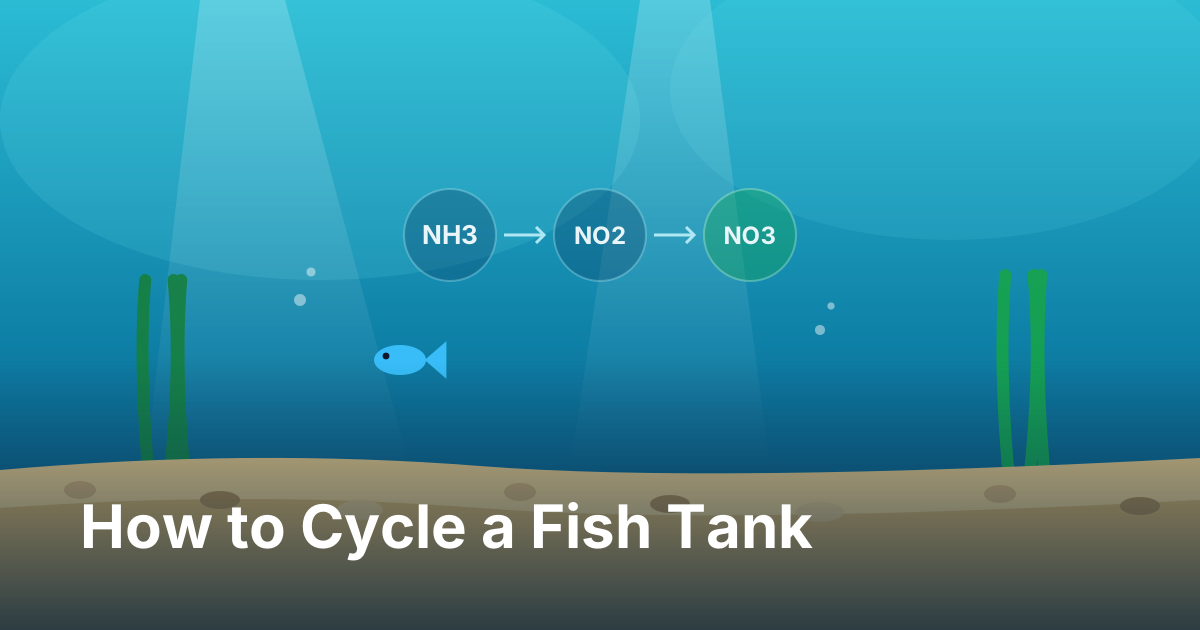
Fish produce ammonia through waste and respiration, and ammonia is highly toxic. In an established tank, two groups of bacteria handle it:
- The first group converts ammonia (NH3) into nitrite (NO2), which is also toxic.
- The second group converts nitrite into nitrate (NO3), which is relatively harmless and removed by water changes.
Cycling is simply growing those two bacterial colonies in your filter before fish arrive, so that from day one there is a living filter ready to neutralise waste. This is called the nitrogen cycle, and it is the foundation of every healthy aquarium.
Why you cannot skip it
A brand-new tank has no bacteria. Add fish and their ammonia has nowhere to go, so it builds up and burns their gills, a condition called new tank syndrome. Even if the fish survive, they are stressed and prone to disease. Cycling first means the bacteria are already there to keep ammonia and nitrite at zero.
The fishless cycle, step by step
A fishless cycle grows the bacteria using an ammonia source instead of live fish, so nothing suffers while the colony builds. It takes two to six weeks.
- Set up the tank fully. Substrate, heater, filter and dechlorinated water all running. Sizing everything first helps, our guides on the right heater and right filter walk through it.
- Add an ammonia source. Use bottled pure ammonia, or a small pinch of fish food left to break down. Aim for about 2 to 4 ppm on a test kit.
- Test every day or two. Watch ammonia rise, then start to fall as nitrite appears. Then watch nitrite rise and fall as nitrate appears.
- Keep dosing ammonia back up to a few ppm whenever it drops, to keep feeding the growing colony.
- The tank is cycled when it can take ammonia down to zero and nitrite to zero within 24 hours, with nitrate reading on the test. That is your living filter, ready for fish.
Buy a liquid test kit rather than strips for this, as accuracy matters while you are learning the pattern.
How to speed it up
- Seed the filter. A handful of media or gravel from an established, healthy tank carries live bacteria and can cut the cycle to days.
- Use a bottled bacteria starter. Results vary by brand, but a good one gives the colony a head start.
- Keep it warm and oxygenated. Bacteria multiply faster in warm water with good flow, which is another reason to have the heater and filter running from the start.
After the cycle: water changes and stocking
Once cycled, nitrate is the waste product left over, and you remove it with regular partial water changes, usually 20 to 30 percent a week. Base the amount on your tank’s real water volume, which you can find with the water volume calculator, since substrate and decor mean the tank holds less than its rated size.
Do not add every fish at once, even after cycling. A cycled filter is sized to its current bioload, so add fish gradually over a few weeks and let the bacteria catch up. To work out how many fish your tank can support in total, use the aquarium stocking calculator, and confirm your volume first with the fish tank volume calculator.
Frequently asked questions
How long does it take to cycle a fish tank? A fishless cycle usually takes two to six weeks. Seeding the filter with media from an established tank can cut it to a few days.
Can I cycle a tank with fish in it? A fish-in cycle is possible but stressful and risky for the fish, requiring frequent water changes to keep ammonia low. A fishless cycle is safer and kinder.
How do I know when my tank is cycled? It is cycled when it converts ammonia and nitrite both to zero within 24 hours and shows nitrate on a test kit. That confirms both bacterial colonies are established.
Do I need to cycle a tank if I use bottled bacteria? Bottled bacteria speeds cycling but you still confirm the tank processes ammonia and nitrite to zero before trusting it with a full stock of fish.
What is new tank syndrome? It is the ammonia and nitrite spike in an uncycled tank that poisons fish. Cycling before adding fish prevents it entirely.
The bottom line
Cycling is the difference between fish that thrive and fish that quietly die in the first month. Set the tank up completely, grow the bacteria with a fishless cycle, and only add fish once ammonia and nitrite both read zero. Then size your water changes and stocking to your real volume with the fish tank volume calculator and stocking calculator. Patience here is the cheapest insurance in the hobby.